
杨澜访谈录
China's World Cup hopes begin with children taking the field. What's next?_我的网站

A |
据报道,亚特兰大主教练加斯佩里尼认为没有理由对球队“令人难以置信”的赛季感到失望。
上赛季的欧联杯冠军在本赛季早些时候看起来很有希望争夺意甲冠军,但最近几周状态下滑,四场不胜的战绩让他们付出了沉重代价。

B |
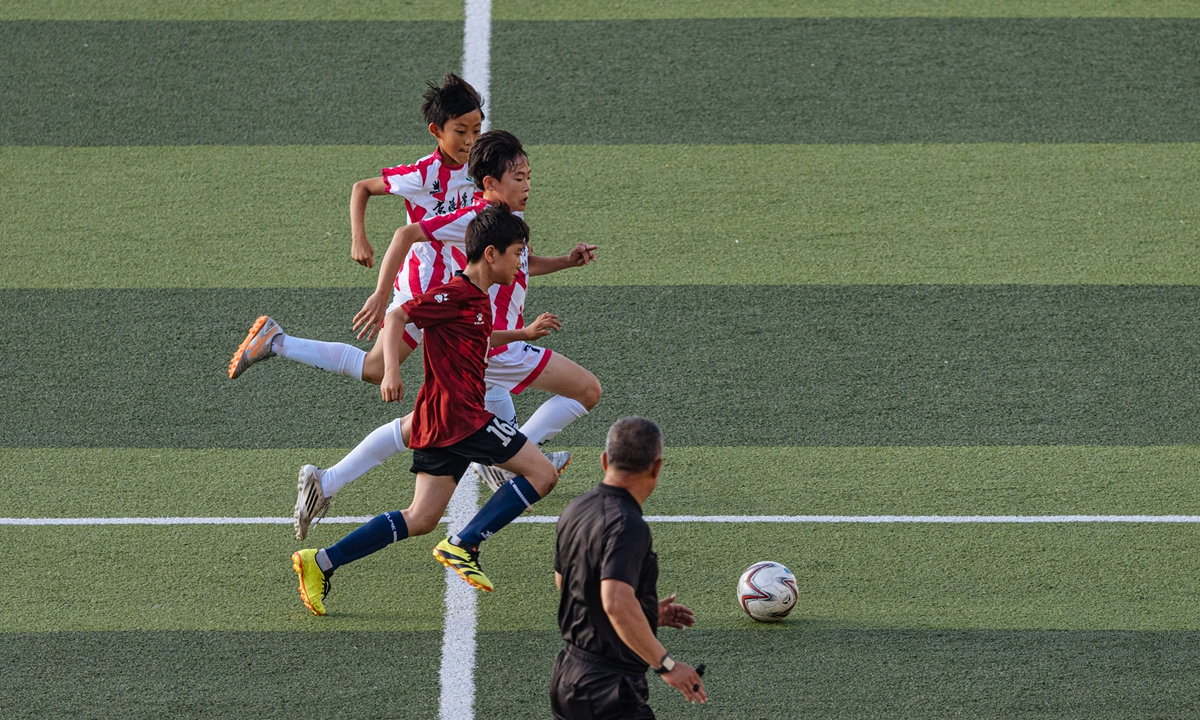
It was a busy school break. The national finals of the 2025-26 youth campus soccer league, rounds of the fifth China Youth Football League, city and provincial campus competitions, private club cups and overseas invitationals filled the calendar. Some children played close to home; others spent part of their summer travelling with teammates from one tournament to another.
The sixth 2034 Cup was among the most visible. Its 39 regional qualifiers drew 882 teams and 12,604 players, with 128 teams reaching the finals in Suzhou, East China's Jiangsu Province. Teams from other countries also took part, adding an international element to a tournament aimed at primary-school players, according to the Xinhua News Agency.
Does this crowded calendar by itself signal a turnaround for Chinese soccer? China's men last reached the World Cup in 2002. But the summer offered a view of a playing base being built from below and raised a harder question: Can the enthusiasm survive the return to school, unequal access to training and the growing costs borne by families?
From the first touch
In China's youth soccer system, coach Zhao Xinxin works at its broadest and most fundamental level - introducing young children to the game.
He coaches an introductory group of about 15 three-year-olds, three interest classes of 15 to 20 children aged five to 10, and four advanced groups of roughly 10 players aged five to 14. He has worked with more than 100 children over the years.
Starting younger is one of the clearest changes Zhao has observed in recent years. Soccer is appearing not only in schools and social clubs but also in some kindergartens. Most parents initially want an after-school activity that gets their kid moving.
Only when a player begins to stand out do questions about more advanced training and a possible route forward arise.
That route now has several layers. A child in a commercial club can move from introductory and interest classes to advanced teams. A school player may be selected for district and city teams, then enter national campus competitions; professional academies, sports schools and social clubs provide other pathways.
China began promoting campus soccer on a national scale in 2015, when six government departments issued guidelines calling for soccer to be incorporated into school education through designated soccer schools, regular competitions, teacher training and improved facilities, according to the Ministry of Education.
The program has continued to expand while shifting its focus from increasing participation to improving the quality of teaching, training and competition. In 2025, another 4,928 schools were recognized as national youth campus soccer schools, according to the ministry.
The result is more soccer on the calendar. Zhao told the Global Times that youth matches take place somewhere in Beijing almost every week, especially during school holidays. His club's advanced teams play weekend fixtures with referees and standings, as well as regional competitions and finals.
Tournaments such as the 2034 Cup give this broad base a visible target. Soccer commentator and youth-project organizer Dong Lu launched the event in 2021 after repeatedly seeing Chinese social media celebrate Japan's high-school soccer tournament. Its name looks toward the 2034 World Cup, when the first group of participants will be about 25.
Earlier this summer, a team selected through Dong's youth soccer project offered another source of encouragement. The Chinese Football Boy U12 team won all seven matches at the Sigismondi International Youth Cup in Italy, becoming the first Asian team to claim the championship.
Yet Dong cautioned against reading too much into a single championship. Strong players, he said, must emerge from a much broader soccer culture. "Players come from the people around us, from the soil and culture in which they grow," he told the Global Times.
Who can keep playing?
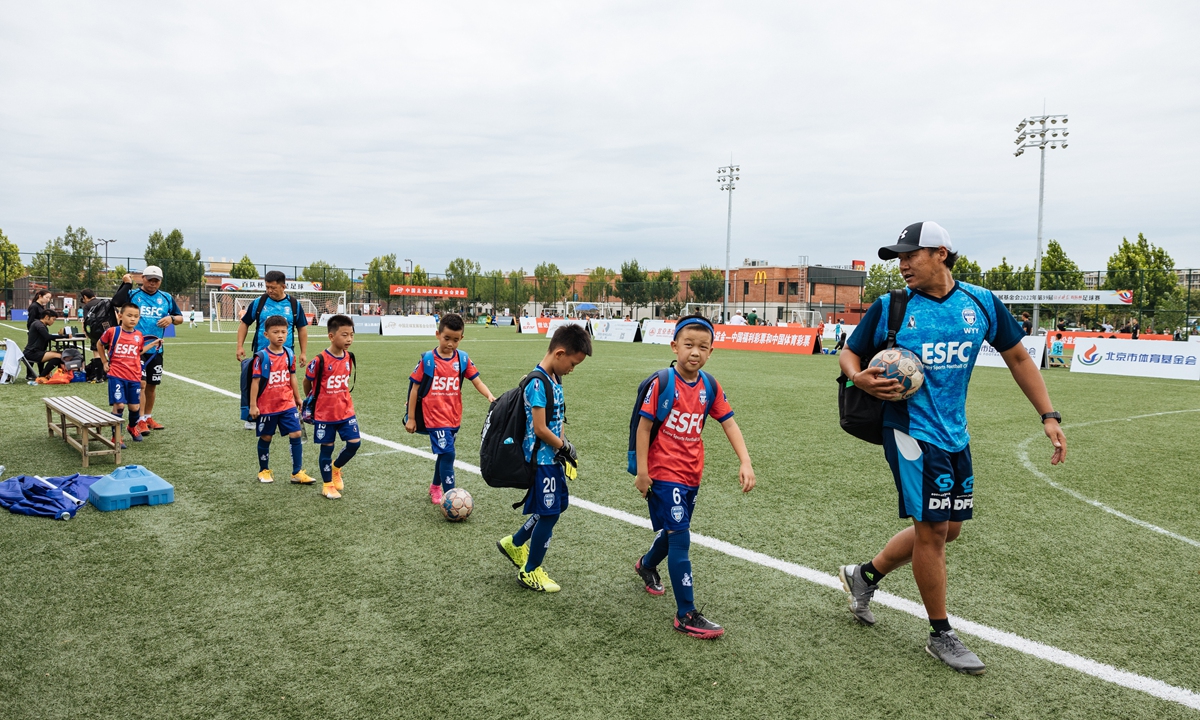
For Zhao, the first major break comes at 12. Children may train throughout primary school, then stop after entering middle school as homework, examinations and family expectations take over - a pattern he calls "retiring at 12."
Campus soccer should be the main way to keep the player pool broad, he said, because school is where nearly every child spends most of the day. More schools now provide soccer classes and in-class competitions, but implementation varies.
Zhao recalled a class tournament in which a child was injured. After a parent complained, the remaining matches were cancelled. Safety concerns are understandable, he said, but cancelling competition altogether removes opportunities from every child.
For families, this is also the stage when soccer stops being a simple extracurricular activity. If a child has shown unusual ability, parents must decide whether to seek stronger teams, change schools, accept more travel and training, or keep soccer only as an interest. The decision depends not only on talent and the child's wishes, but also on educational expectations and how much time and money the household can commit.
The contrast with Europe lies partly in continuity. Zhao cited his nephew in Hungary, who trained at a Barcelona-affiliated academy between the ages of six and eight before being selected by a local club at nine.
Once children join organized training there, he said, they are registered at relatively low cost, and their movement between clubs is recorded in the soccer association's system - closer to transferring schools than simply leaving one commercial course for another.
Dong made a broader comparison. Japan's national team increasingly draws on players who have further developed further in European leagues, while China still relies mainly on its domestic league to prepare future internationals.
In his view, the two systems operate like production lines with different competitive standards. Young Chinese players therefore need more high-level matches, whether foreign teams come to China, Chinese teams travel abroad or selected players enter overseas leagues.
But overseas training cannot substitute for a domestic system, nor is it open to every family. Zhao said it requires ability, physical readiness, money and the capacity to adapt to a different language, diet and daily life. Some parents send a child abroad; others move with them, reorganizing work and family life around soccer without knowing whether the child will ever turn professional.
For now, the most telling test may come not in 2034, but this coming September, when a child enters a new grade and decides whether there is still time in the week for soccer.
。

C |
然而,1-0战胜AC米兰的比赛确保亚特兰大将在联赛最后五场比赛中排名第三,处于争取欧冠资格的有利位置。
当天早些时候,博洛尼亚1-0战胜领头羊国际米兰给亚特兰大带来了压力,但埃德森对阵AC米兰的进球起到了决定性作用。
加斯佩里尼对亚特兰大的赛季表现毫无遗憾。他对DAZN说道:“对我来说,这是一个令人难以置信的赛季,今晚的胜利让我们有机会再次进入欧冠,这是一个非凡的目标,对贝尔加莫来说至关重要。博洛尼亚的胜利可能会很危险,但在圣西罗的胜利给了我们一个不可思议的转折点。”
“别开玩笑了,拿到64分怎么可能有遗憾。确实,我们距离前两名差七分,这是因为与领头羊的直接对话中失利。但从技术角度来看,认为亚特兰大能够争夺联赛冠军有点夸张。看看排在我们后面的那些豪门球队就知道了。”
亚特兰大本赛季在客场拿到了36分,比意甲任何其他球队都多。
这场胜利标志着亚特兰大历史上第三次在意甲双杀米兰,前两次分别是07/08赛季和1940/1941赛季。

D |
本赛季,亚特兰大在意甲联赛33轮过后积64分排名第3。他们接下来将面对为保级而战的莱切。
Current article:http://9l3zg7a.zhuankaizhuohangwangdixi.shop/eo1m/20260826/4249.html
Published on:00:00:00
上一篇:“燃点”电影观的影响:两个字,不燃点 下一篇:러시아 와일드베리스 화재
我的网站相关阅读
- Explyt团队打造的代码智能体评测新标准:光靠“通过/失败”根本不够用
- 奥克兰高档电动自行车连环窃案告破,警方还搜出200发子弹
- Georgia Declares Embryos ‘With a Detectable Heartbeat’ Can Be Claimed as Dependents on Taxes
- 2024年,宝马撞人案温庆运被注射死刑,行刑前他见了父母最后一面
- Chinese Embassy rebuts Teodoro’s renewed allegations against released 70 Chinese workers; expert warns selective enforcement harms ties
- 朝ドラ『ばけばけ』で最も演技が良かった男は? ベスト俳優(1)圧倒される…芝居の凄みを改めて証明した男は?
- 代替関税、発表翌日に上乗せ表明 敗訴で焦り、影響力誇示 トランプ米大統領
- 《魔法门之英雄无敌III重制版》游民试玩 原汁原味,焕然一新
- 尹锡悦被逮捕的细节及画面曝光 行动使用 “攻城兵器”历时七个小时
我的网站最新文章
- 施罗德16中3仍赢球!德国男篮获超级杯:祖巴茨19+13海佐尼亚19分
- 后续!长春企业用消费券抵工资负责人被约谈,劳动监察部门介入
- ステージ4の肝臓がんと闘う35歳元芸人 闘病生活支える妻が一人で福井に残った理由 愛知に戻る選択肢も
- 国家粮食和物资储备局向广西调运中央救灾物资支持做好台风“紫檀”救灾救助工作
- 江阴港区上线危化品“智慧”防控平台
- 17岁男子、16岁男子两人持刀追逐13岁男子 被湖南湘潭市警方拘留
- 中国证监会发布上市公司2025年年度财务报告会计监管报告
- 从“造星”到“运营星” 浙江一民企获批开展卫星物联网商用试验,从“造星”到“运营星” 浙江一民企获批开展卫星物联网商用试验
- With Trump a No-Show at Debate, GOP Wannabes Can Attack, Defend or Ignore
- 沈梦露加盟凯尔特人女足
- 上海宝山启动防台风避险转移安置工作 已转移撤离人员2.5万余人
- 放开成人内容,OpenAI是为了提升性能?
- 6-22!追梦:火箭最好的进攻手段就是抢进攻板 这就是他们的风格
我的网站随机推荐
- 美国政府停摆,已刷新历史第二长纪录
- 石达开亲信将领朱衣点,随石达开离京出走,后因何率部千里回朝?,泾蓝杂说,原创 石达开亲信将领朱衣点,随石达开离京出走,后因何率部千里回朝?
- BPSC Bharti 2025: बिहार AEDO के बंपर पदों पर आवेदन स्टार्ट, फीस, पात्रता सहित पूरी डिटेल यहां करें चेक
- Kimi K3其实“贱卖”了
- धनु से मीन Aaj Ka Rashifal 27 अगस्त 2025: कुंभ वाले जीवन में अपनाएं नए विचार, जानें बाकी राशियों का हाल
- 如何选长春一站式包含布置的出阁宴酒店
- Guangxi lion dance team wins top prize at Vietnam event
- Death Toll From Landslides, Floods in India’s Assam Rises to 179 - Photo, Video
- 【观点】正信期货:焦煤基本面偏强,盘面延续反弹
- 长川科技:董事、董事会战略委员会委员张昊玳离任
- 狮城业者揭内幕!新马低价购物团 中国客团费460新元起
- 对我国自来水质量作出虚假言论 Sterra公开道歉
- 梦回当年!火箭85分创18年以来季后赛最低 当时火箭登大战宇宙勇